Crayfish Collection Story

- Author
- Callie Klatt Golba, Ph.D., Curator of Turtle Conservation
- Date
- July 20, 2026
I never expected crayfish to become one of my favorite animals. After more than a decade studying turtles, however, these overlooked crustaceans have broadened how I think about wetland conservation and about the importance of museum collections for wildlife conservation. This is a story about my newfound love of crayfish and how my current obsession highlighted the importance of museum natural history collections for both science and fieldwork.
As a turtle biologist, I often use aquatic traps to capture turtles and collect data that informs turtle conservation. While checking these traps, we inevitably catch other critters that inhabit the same wetlands, including crayfish. Because crayfish are a favorite food of our focal species, the Blanding’s turtle, we also document the number of crayfish we catch in our turtle traps. Anecdotally, we tend to catch more of these state-endangered turtles where we also catch more crayfish. But with more than 20 species of crayfish in Illinois, simply collecting total crayfish counts may not be enough to answer broader questions about the wetland communities that live alongside our turtles.
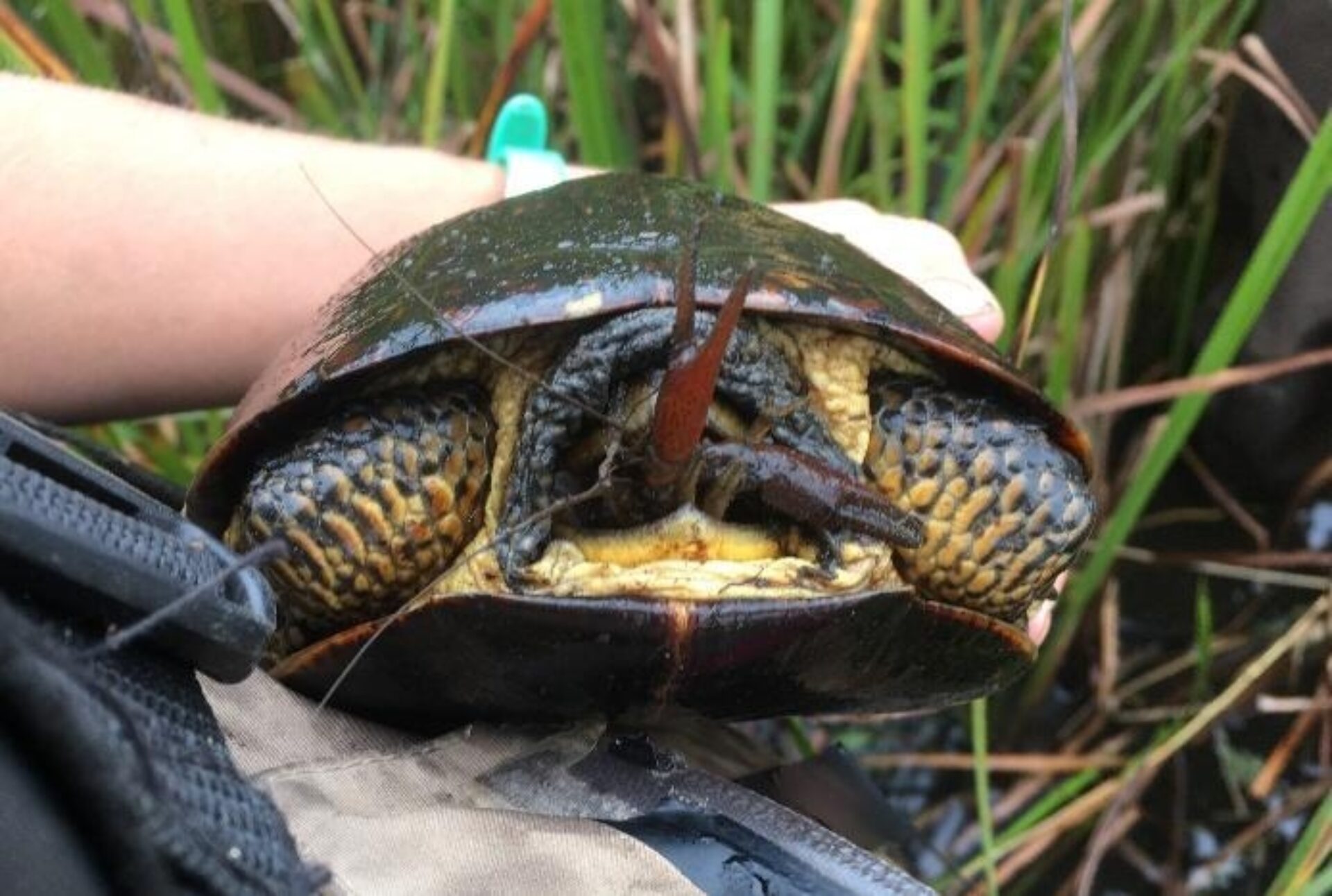
Blanding’s turtle mid-meal of a crayfish.
After working with turtles for more than a decade, I found myself wondering if we could improve the data we collect on other important species we encounter, like crayfish. That first required improving my own identification skills and then teaching the rest of our team to do the same.
As I hyper-fixated on crayfish, I began to appreciate just how important they are to healthy wetland ecosystems. They serve as food for many aquatic animals, and as opportunistic omnivores and scavengers, they play an important role in nutrient cycling. They can also serve as indicator species for habitat quality. Crayfish may be the most underrated ecosystem engineers. Beavers get a lot of attention for creating wetland habitats, but some crayfish species, like the Great Plains Mudbug (Lacunicambarus nebrascensis), create burrows that aerate the soil, improve nutrient turnover, and even provide homes for the endangered Hine’s emerald dragonfly. Unfortunately, several invasive crayfish species are spreading throughout our landscape, displacing native species and the ecological services they provide. The more I learned, the more convinced I became that we should be paying closer attention to our crayfish populations.
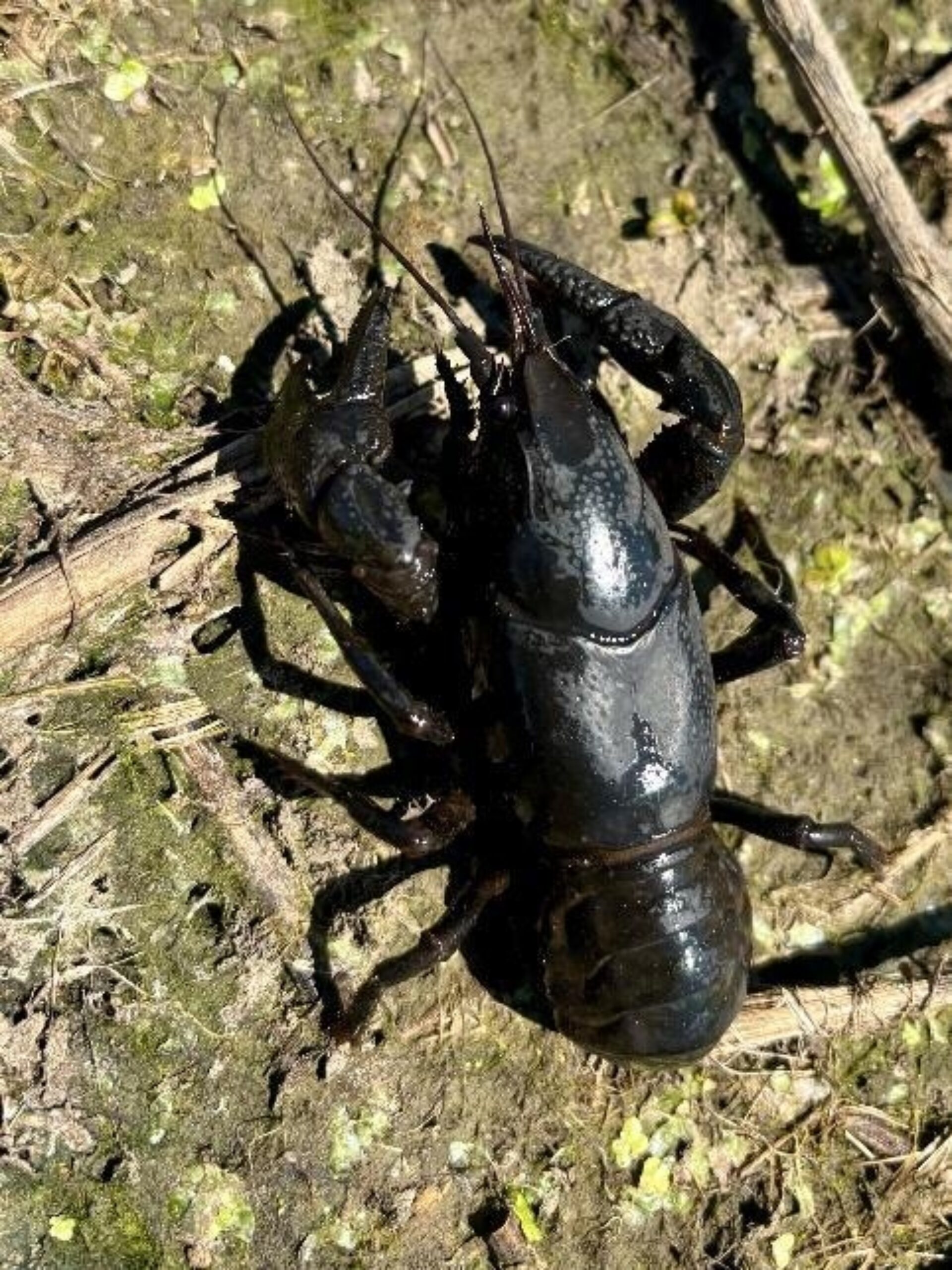
Crayfish found in the wild.
Luckily, I was able to recruit more crayfish converts to the cause. Kathryn McCabe, a wildlife biologist with the Lake County Forest Preserve District, and I dug into our field guides to start learning the differences between crayfish species. We thought, “How hard can this be?” We were quickly proven wrong.
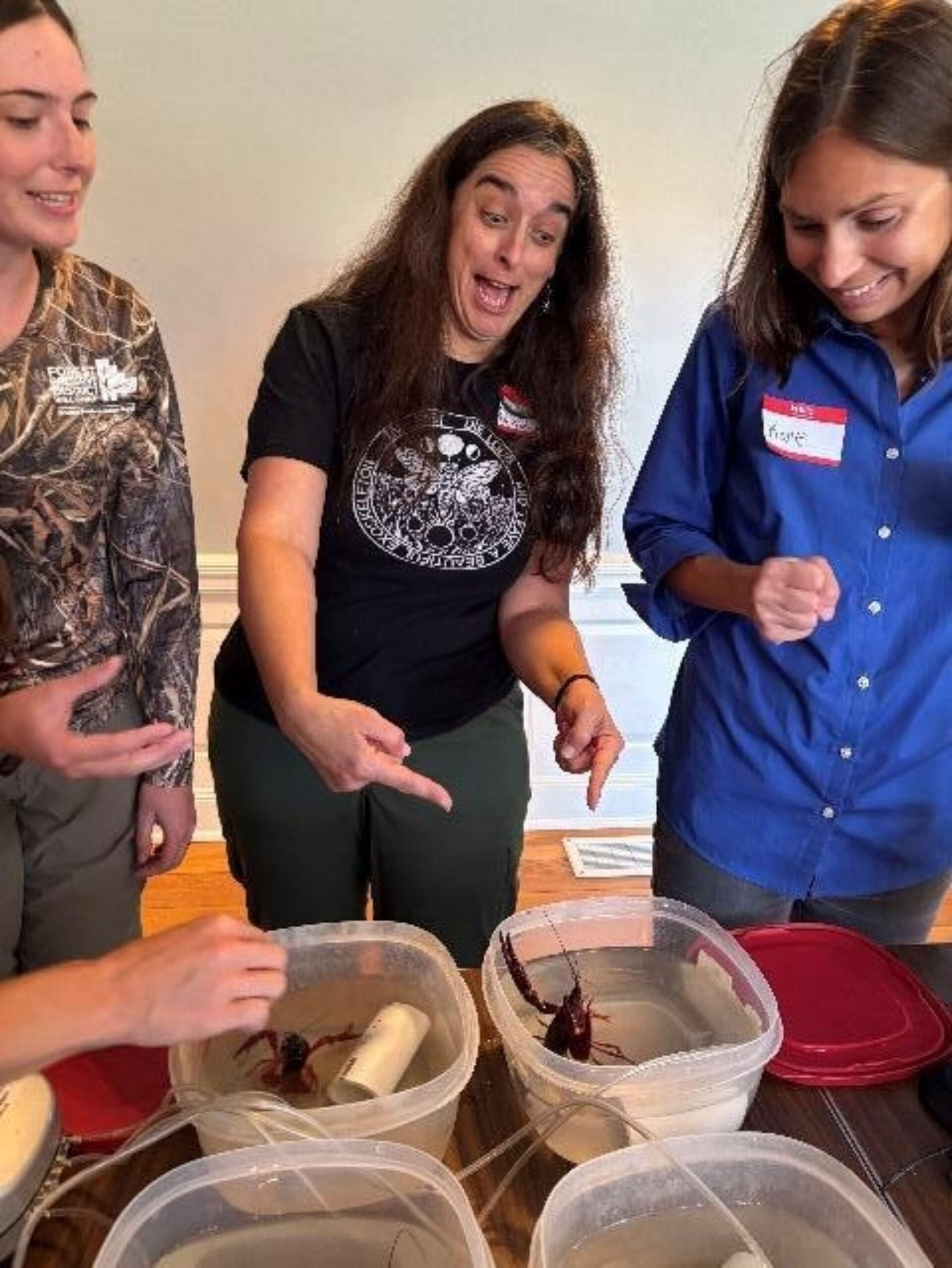
Kathryn and I were joined by other Nature Museum Scientists, Allen Lawrence and Allison Sacerdote-Velat, to learn from the experts about crayfish at the Great Lakes Crayfish Monitoring Trainings hosted by Michigan State University and Illinois-Indiana Sea Grant.
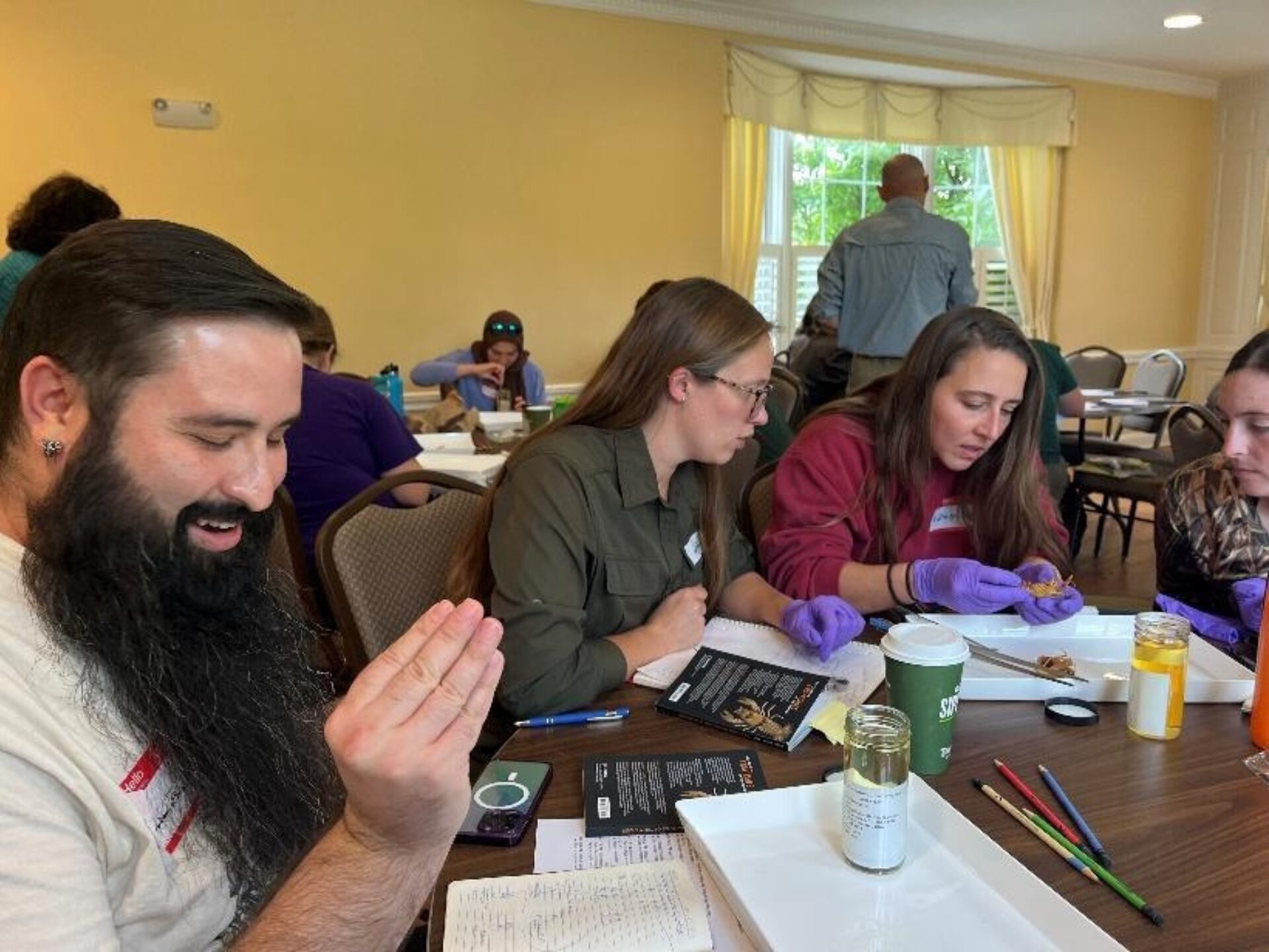
Although some species are relatively easy to identify in the field, many of the characteristics that distinguish crayfish species are incredibly subtle. They can be nearly impossible to see without a hand lens, probe, bright flashlight, and an expert eye. Features like the slight bend beneath the eye (the suborbital angle), space between exoskeleton on their back (areola), differences in the shape of tiny bumps on the body (tubercles), and the angle and number of terminal elements on the male gonopods left us more confused than ever. We memorized key characteristics from multiple field guides and studied every photo we could find, but there is only so much you can learn from diagrams and pictures. Having actual crayfish in hand proved to be the best way to build our knowledge and improve our identification skills.
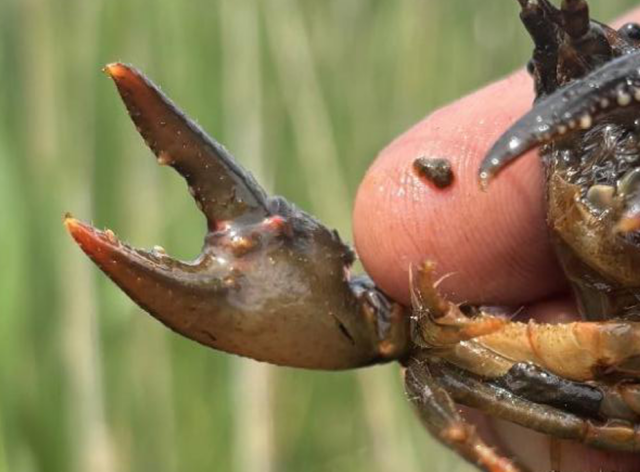
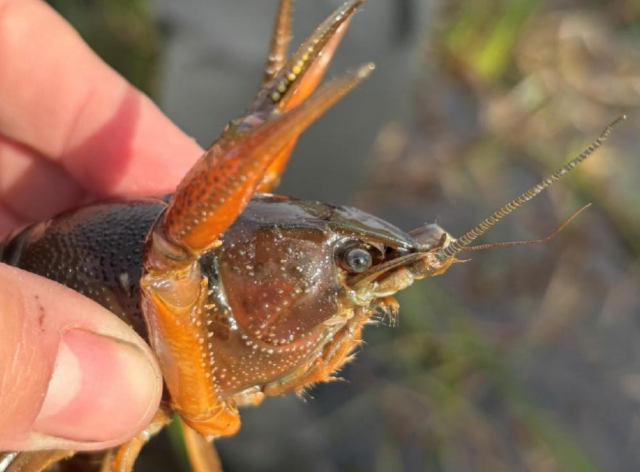
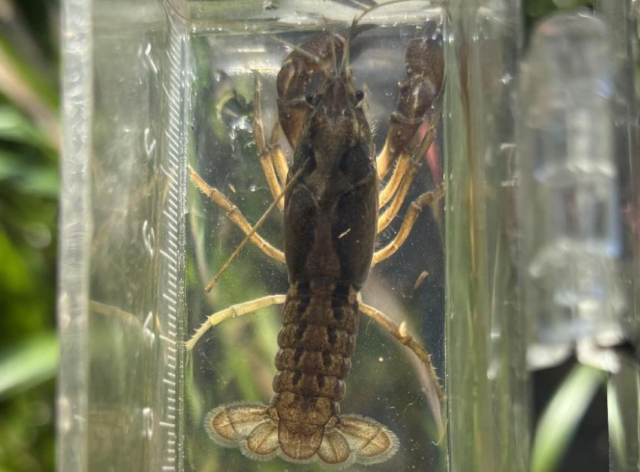
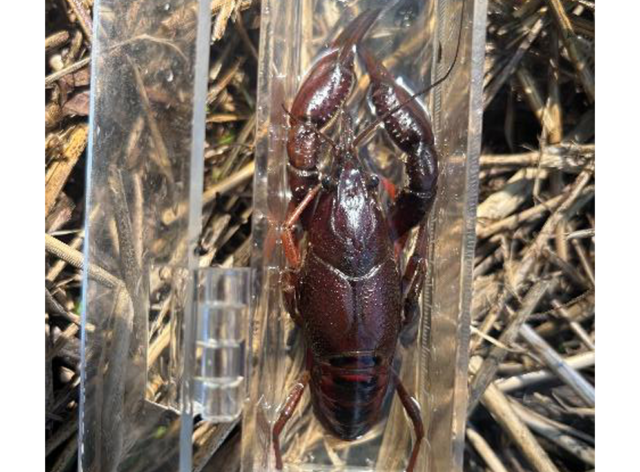
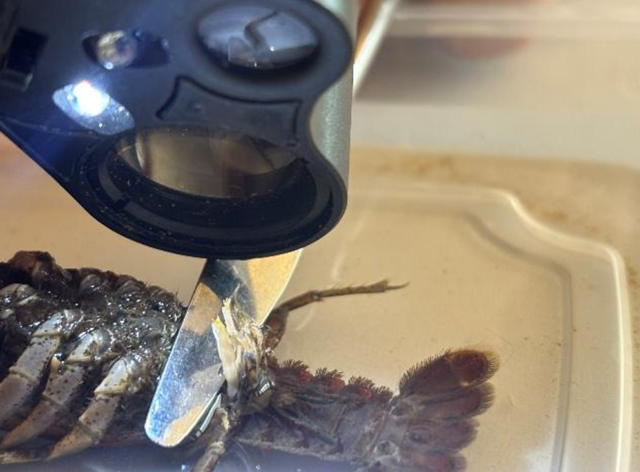
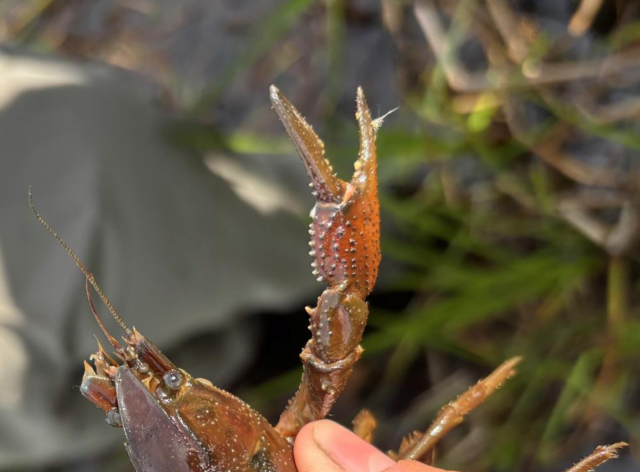
Features of crayfish that help identify to species. 1 & 2: different tubercles on chela. 3: shape of suborbital carapace below eye. 4 & 5: tail pattern and areola opening. 6: shape of male gonapods.
This is where museum natural history collections become an incredibly valuable tool for supporting in situ conservation. At the Chicago Academy of Sciences founded in 1857, our natural history collection contains specimens dating from the 1830s to present and emphasizes documenting biodiversity, particularly throughout the Midwestern United States. We maintain extensive collections in mammalogy, herpetology, ornithology, oology, malacology, entomology, botany, geology, and cultural history. The specimens in these collections serve as an empirical record of the past, helping us understand our present and better anticipate future changes.
At the time, however, our collection did not include crayfish. Creating a reference collection would not only help us strengthen our understanding of these species today, but also provide future researchers with valuable snapshots of an important component of wetland food webs.
Dawn Roberts, our Senior Director of Collections, and I consulted with crayfish experts to develop a protocol for incorporating crayfish into our natural history collection. Throughout the process, we carefully considered how to minimize impacts on wild populations and ensure specimens were collected as humanely as possible. We also worked with Dr. Eliza Baker from the University of Illinois Wildlife Epidemiology Lab to collect health samples from the crayfish and refine our euthanasia methods.
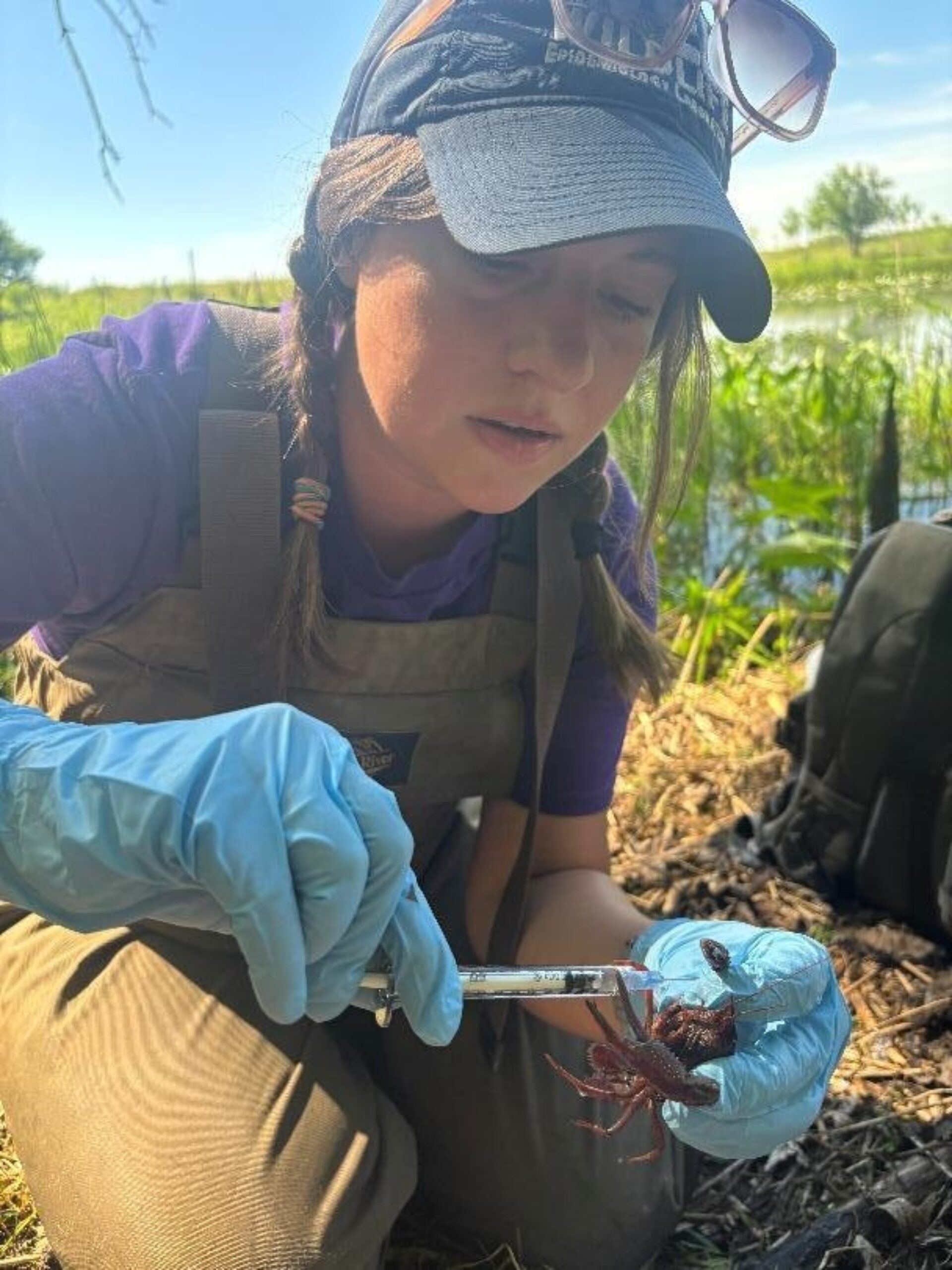
Dr. Eliza Baker performing a health assessment on native crayfish species.
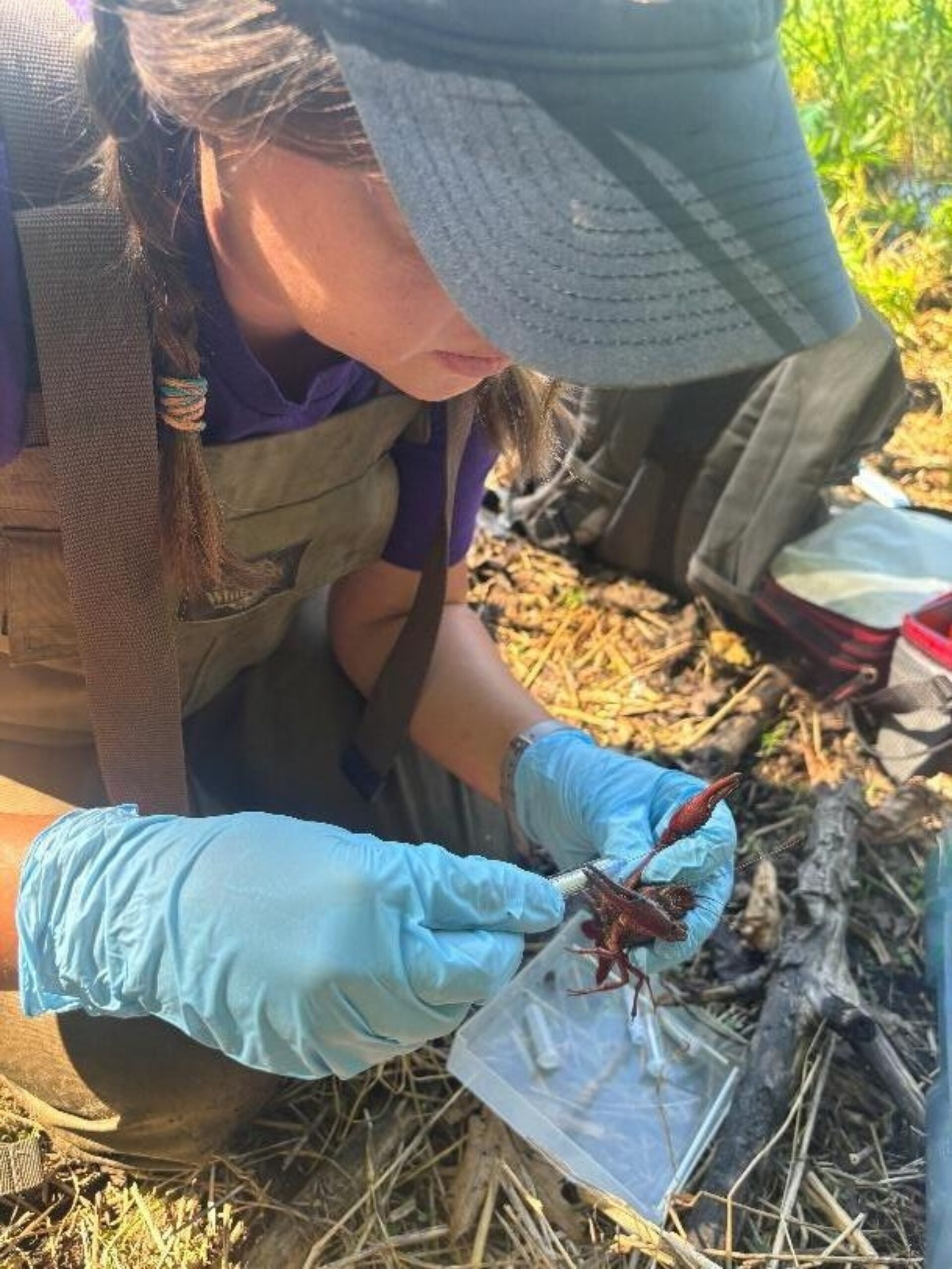
With our protocol established and permits in hand, we began the field season with the goal of collecting one representative specimen of each crayfish species we encountered. As we collected our more common species, our field teams took the opportunity to study their distinguishing characteristics, improving our identification skills and the quality of our field data.
That practice paid off almost immediately. Our detail-oriented wildlife monitoring technicians, Kyra and Caitlin, caught a crayfish that they quickly recognized was different from the common species we had become comfortable identifying in the field. They collected the specimen and brought it back to the lab for a closer look.
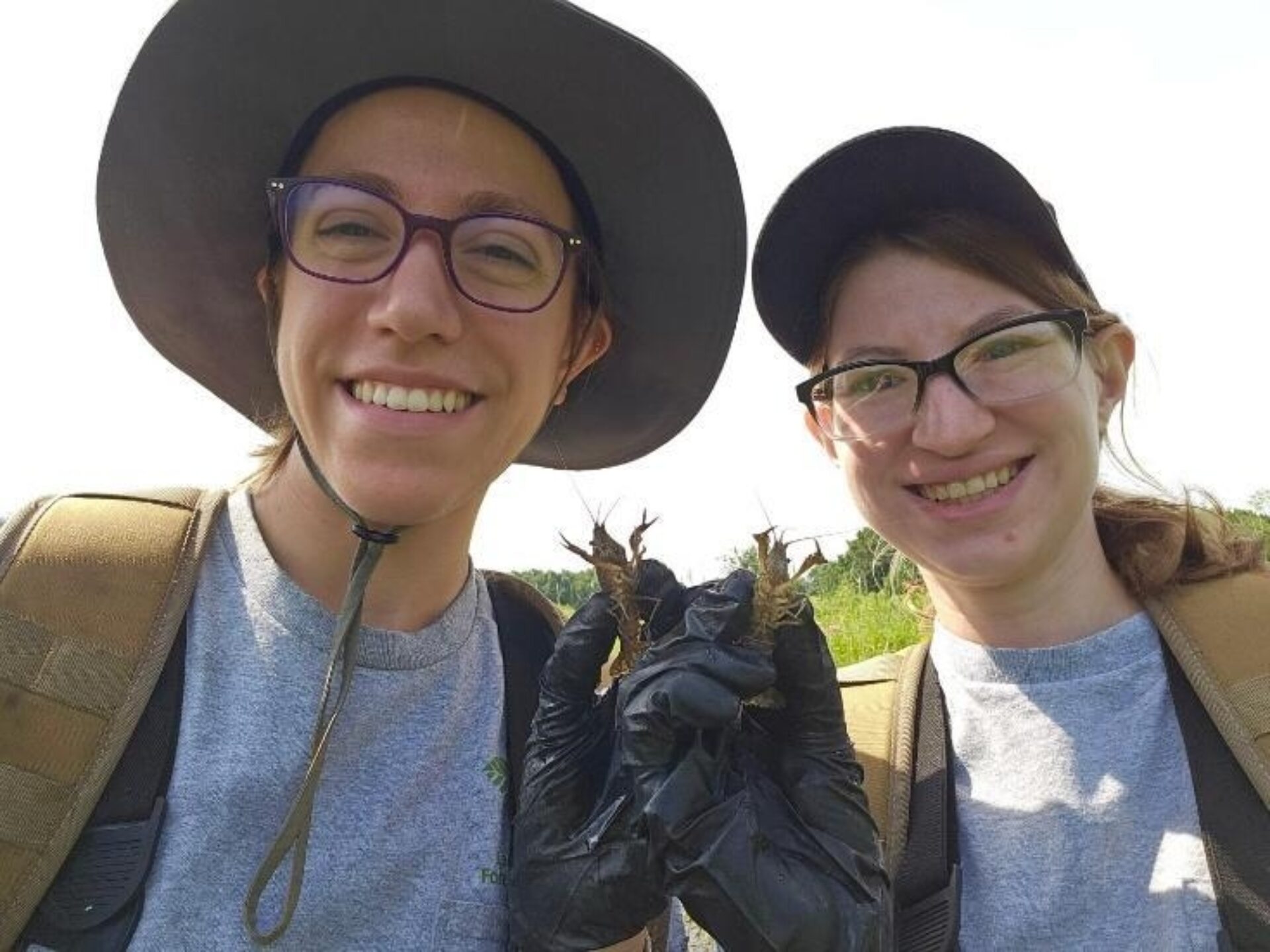
Kyra Woytek and Caitlin Mrowiec, Lake County Forest Preserve District & PNNM Wildlife Technicians, holding crayfish they caught in a trap.
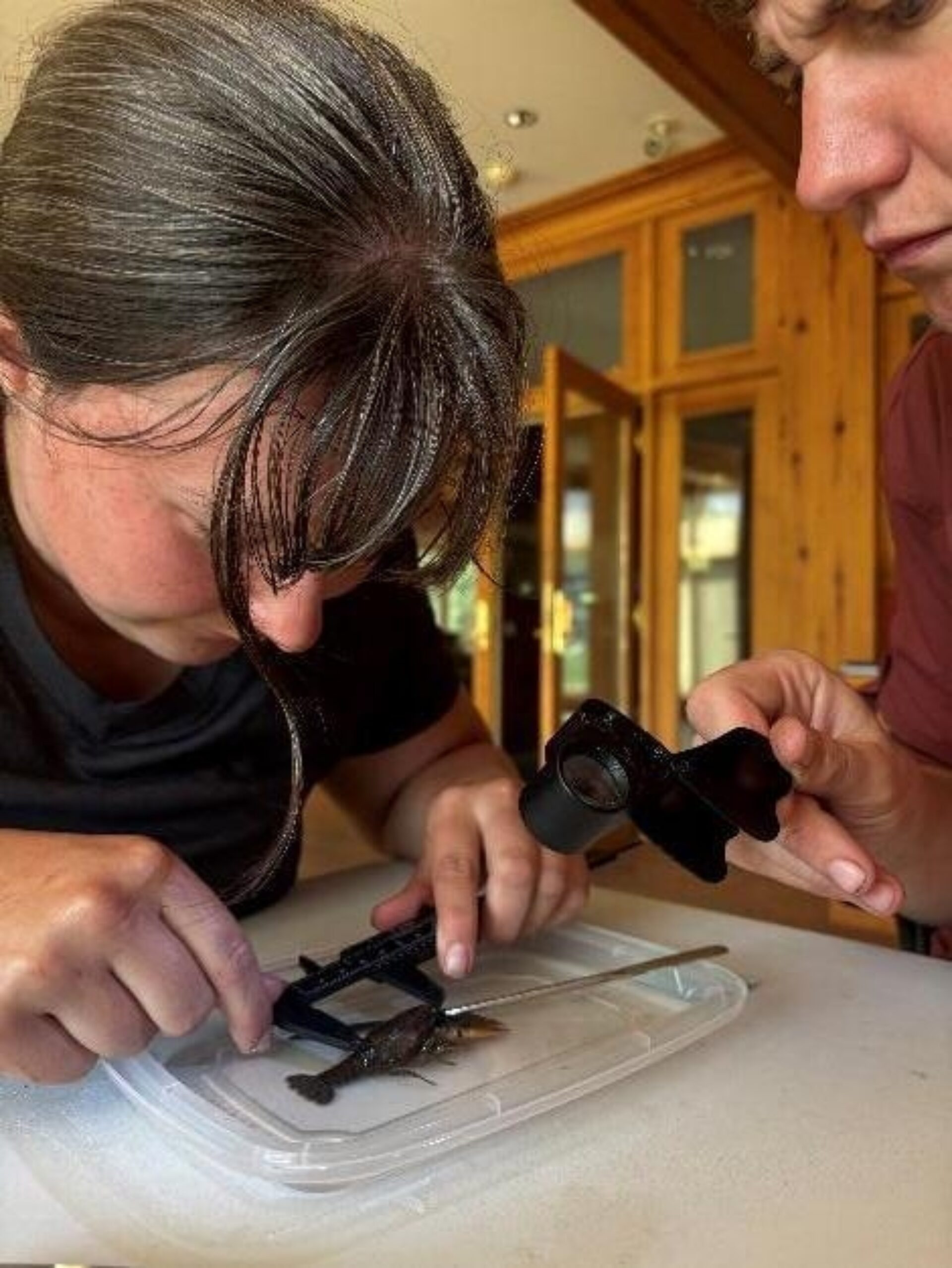
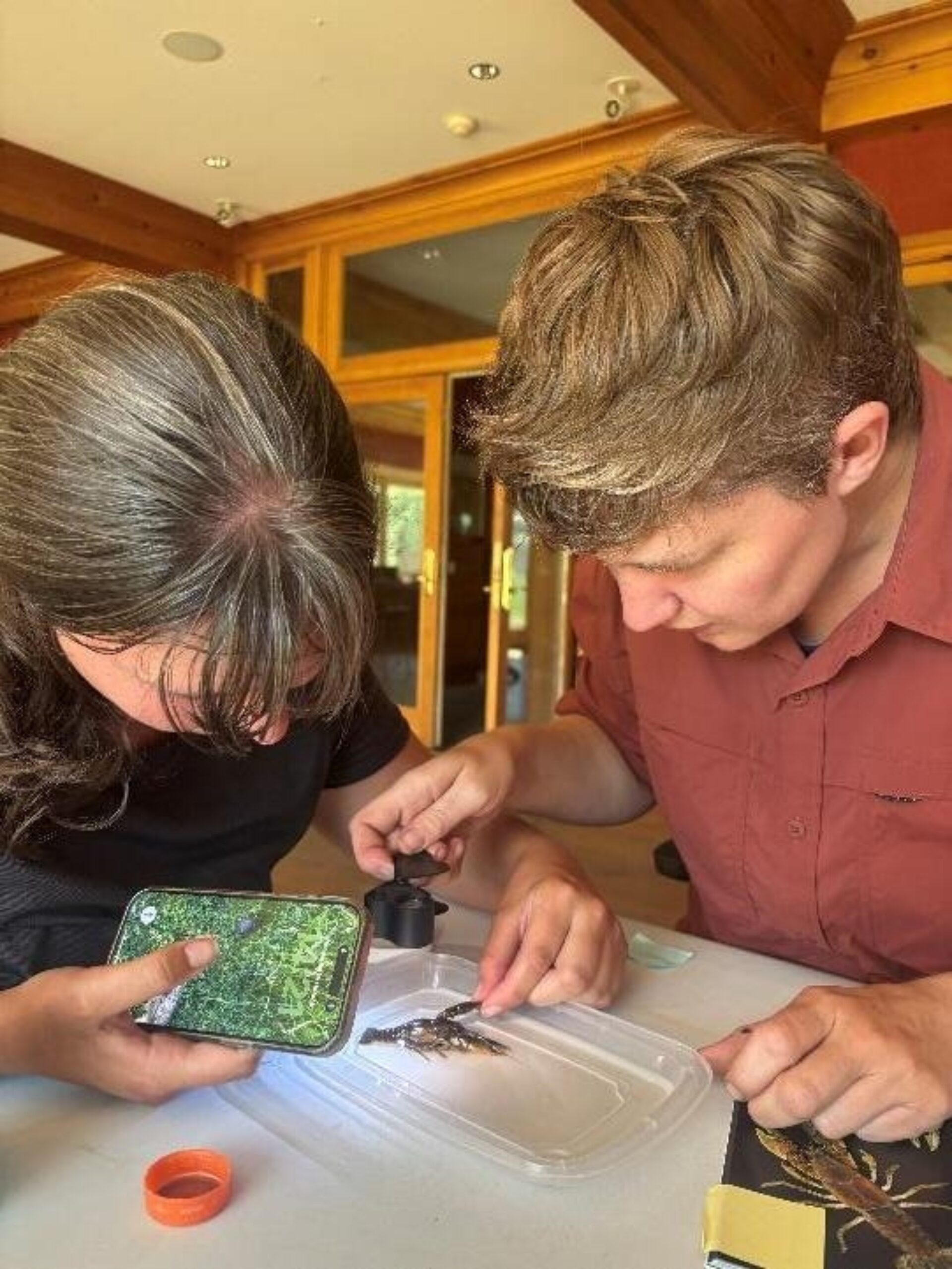
Using hand lenses and bright lights, Grace, one of our turtle technicians, Susan, our high school teacher fellow, and I got to work. After consulting several field guides, we arrived at our best identification and sent photos of the distinguishing features to Illinois Natural History Survey astacologist Dusty Swedberg for confirmation. Dusty quickly replied that we had indeed found a species not yet represented in our collection: the Prairie Crayfish (Procambarus gracilis). We continued studying the specimen, using it as another opportunity to strengthen our field identification skills.
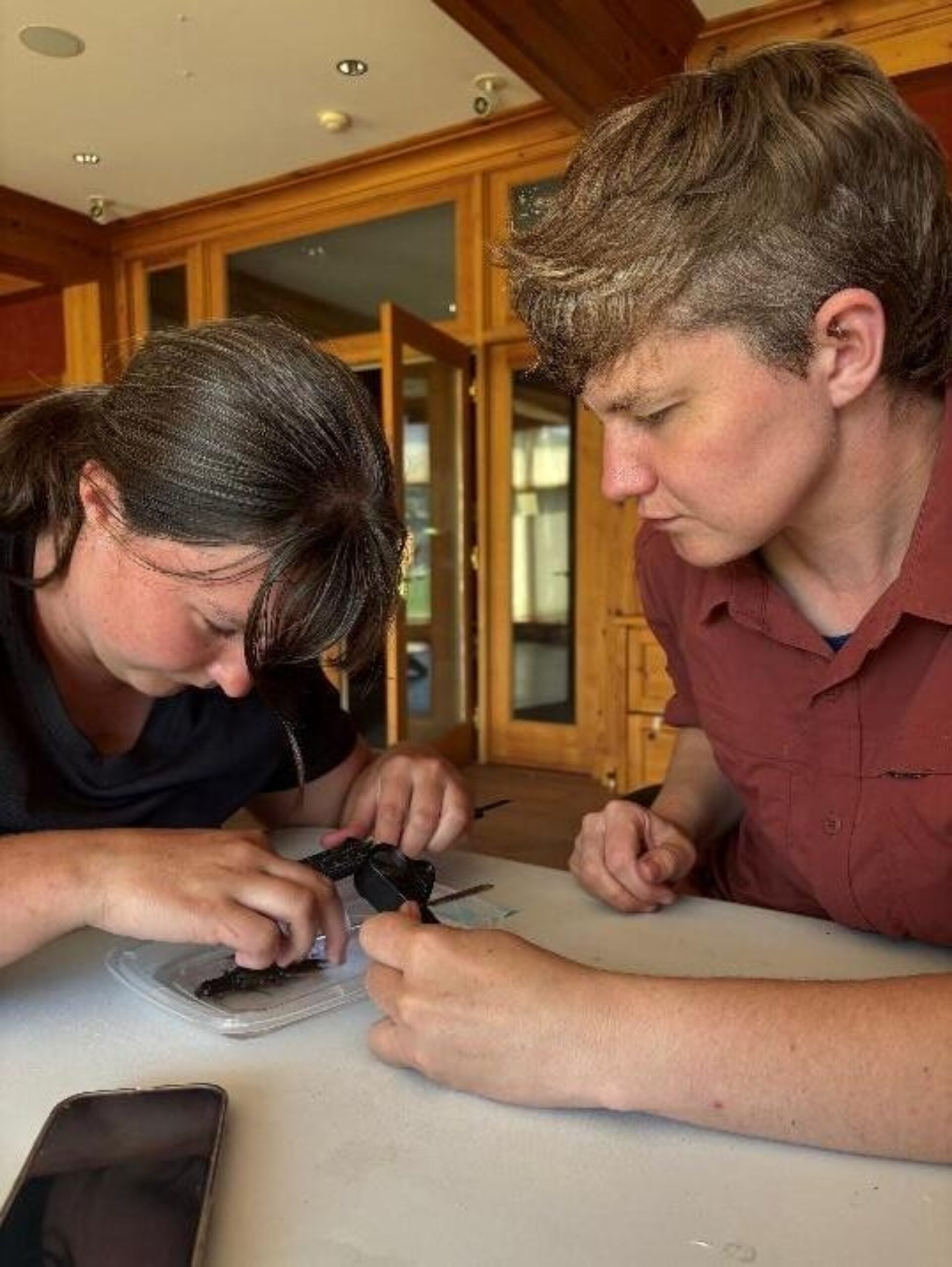
Susan Dirr, CPS High School Science Teacher during their Turtle Research Experience for Teachers fellowship and Grace Allen, PNNM Turtle Technician, looking closely at distinguishing features of the mystery crayfish.
Although we are far from crayfish experts, our field teams have made tremendous progress thanks to the generosity of many crayfish biologists who have shared their expertise. One of my favorite parts of being a wildlife biologist is that there is always something new to learn, and I am grateful to work with a team that is just as excited to learn alongside me. We hope to continue improving our crayfish identification with the help of our growing reference collection and use what we learn to better understand and conserve the wetland ecosystems that both crayfish and turtles call home. I am thankful to work in an environment where my curiosity about one overlooked species was supported, which led to better science, a new museum collection, and ultimately stronger conservation.
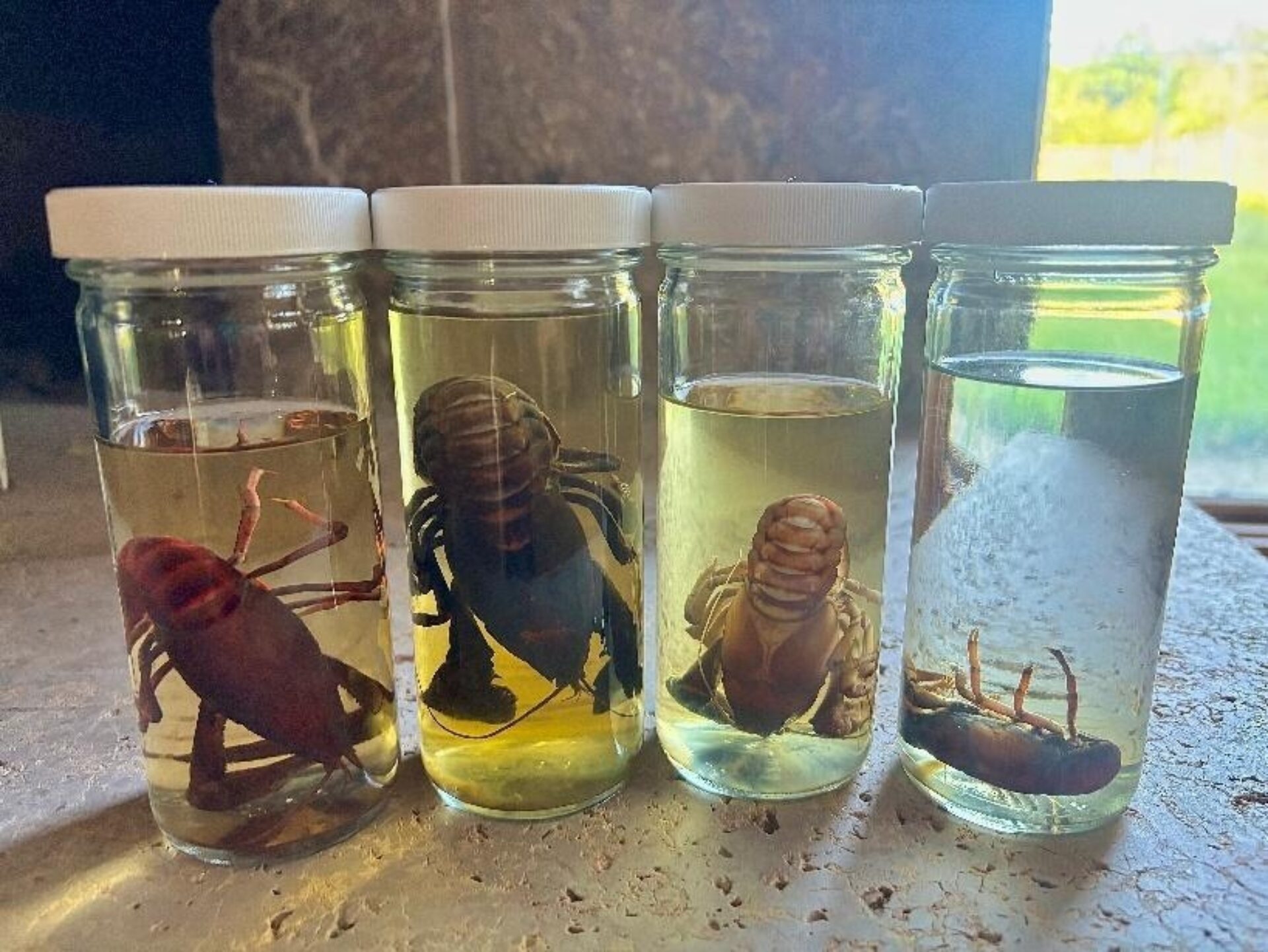
Four crayfish specimens in jars, which are the start of Chicago Academy of Sciences crayfish collection.
References
Graham, Z. A. (2026). Crayfish, Crawfish, Crawdad: The Biology and Conservation of North America's Favorite Crustaceans. UNC Press Books.
Taylor, C. A., Schuster, G. A., & Wylie, D. (2015). Field guide to crayfishes of the Midwest. Illinois Natural History Survey.
Great Lakes Crayfish Monitoring Trainings hosted by Michigan State University and Illinois-Indiana Sea Grant.
Personal communication with Dusty Swedberg, Senior Scientific Specialist, Astacology, Acting Curator of Crustaceans. University of Illinois Urbana-Champaign, Prairie Research Institute, Illinois Natural History Survey
Personal communication with Dr. Zackary A. Graham, Assistant Professor of Biology, West Liberty University
Personal communication with Dr. Reuben Keller, Professor, School of Environmental Sustainability, Loyola University Chicago.