Naming our Future - A Spongy Moth Revelation

- Author
- Forrester Faia, Collections Intern
- Date
- August 25, 2026
Content Warning: This blog post contains a discussion of historic derogatory language that is present in the common names of some insects.
Hello! My name is Forrester Faia and I am a Collections Intern with the Collections & Archives Department at the Chicago Academy of Sciences/Peggy Notebaert Nature Museum. My project for the past 7 months has been processing specimens from the Teenagers Exploring and Explaining Nature and Science collection, also known as the TEENS collection. I identify, catalog, and label the different insects that were collected over the past ten years of the program into the museum's collections. When I started, I thought I would begin to tolerate insects a bit more. Not only have I become tolerant but, in fact, I have become obsessed with the wonderful world of insects.
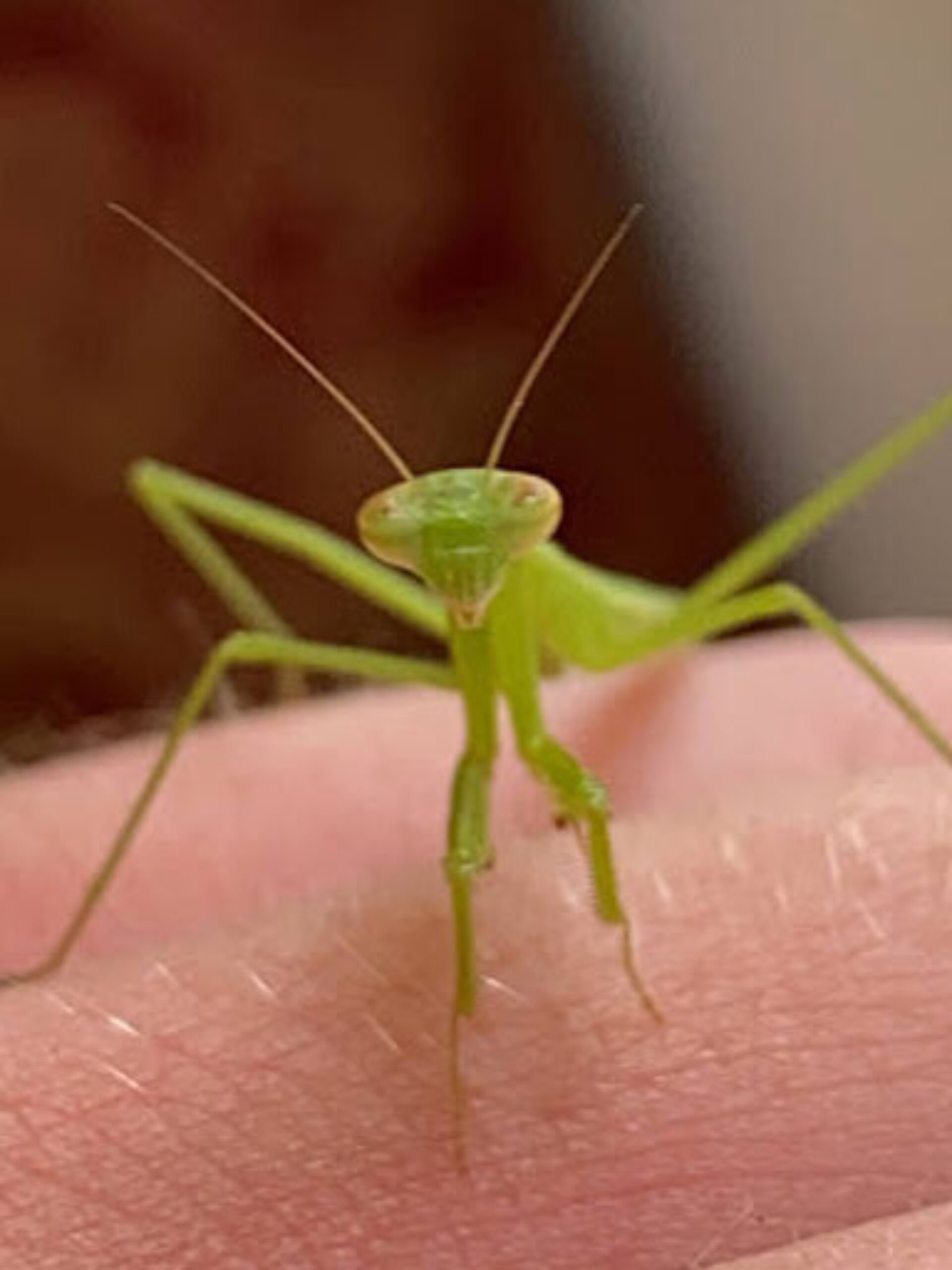
I didn't realize how much these little critters would grow on me as I worked to identify them, let alone how much I already liked them. I was looking through my camera roll and found images of pill bugs, a friendly praying mantis, and bountiful butterflies. Not to mention countless moths, beetles of all shapes, and even some arachnids, which are not insects but are just as cool. Even before I started identifying insects, I was taking photos of them. Until now, I haven't realized that my past was predicting my future.

The author and a praying mantis.
Now why is this important? While this realization was dawning on me, another one was bubbling to the surface. I came across a photo in my image library of a moth I had recently identified in the TEENS collection. Many times I am inspired to dig deeper into the biology of these creatures and their histories in Illinois. When I started researching this species of moth I found something I hadn't thought about before—something you could only really find if you were interested in the etymology of entomology. This search led me to a discussion about the world's influence on common names and what the current conversation is around the naming of our insects.
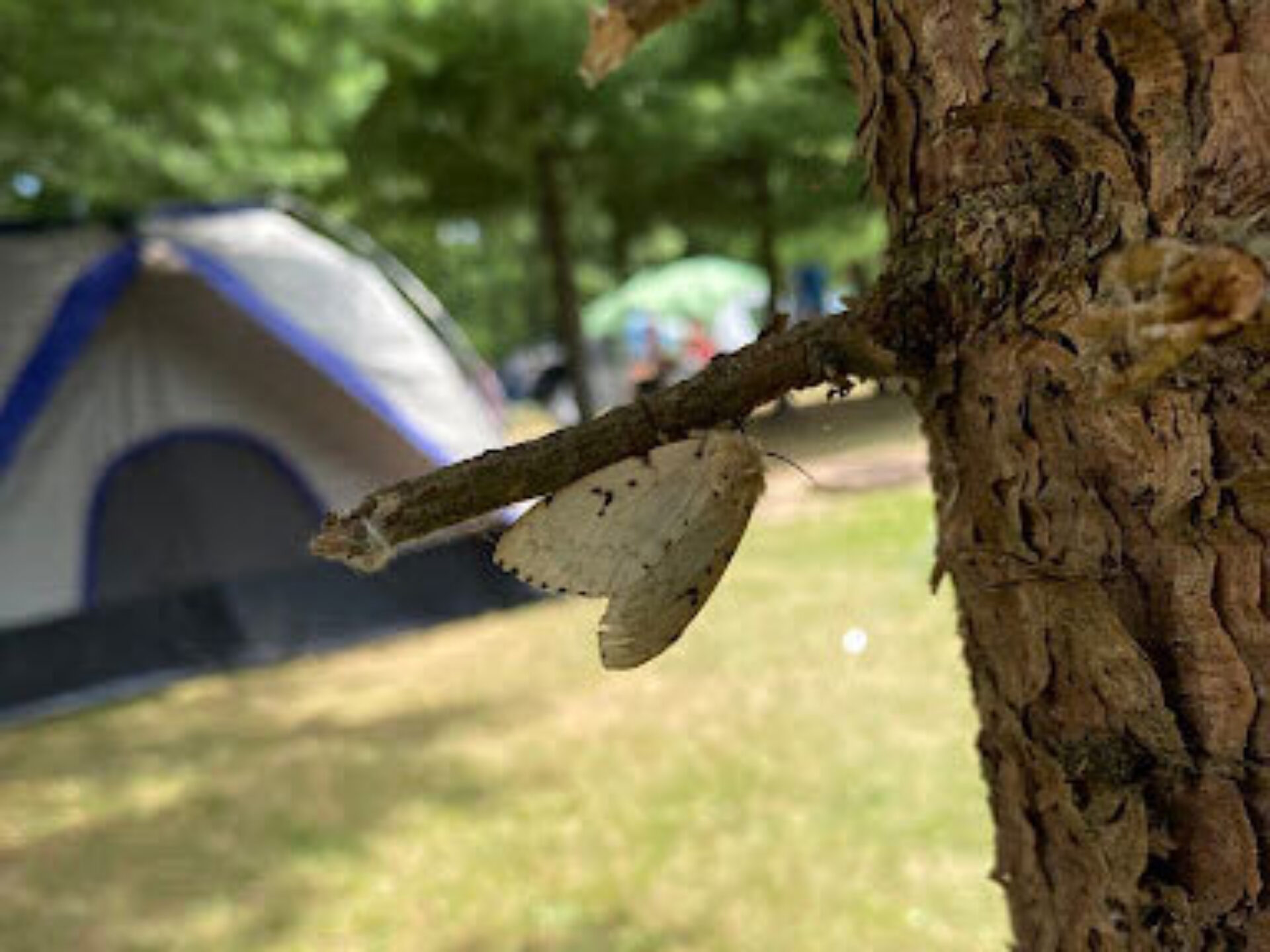
Personal photo of a female Spongy Moth on a camping trip in July of 2022.
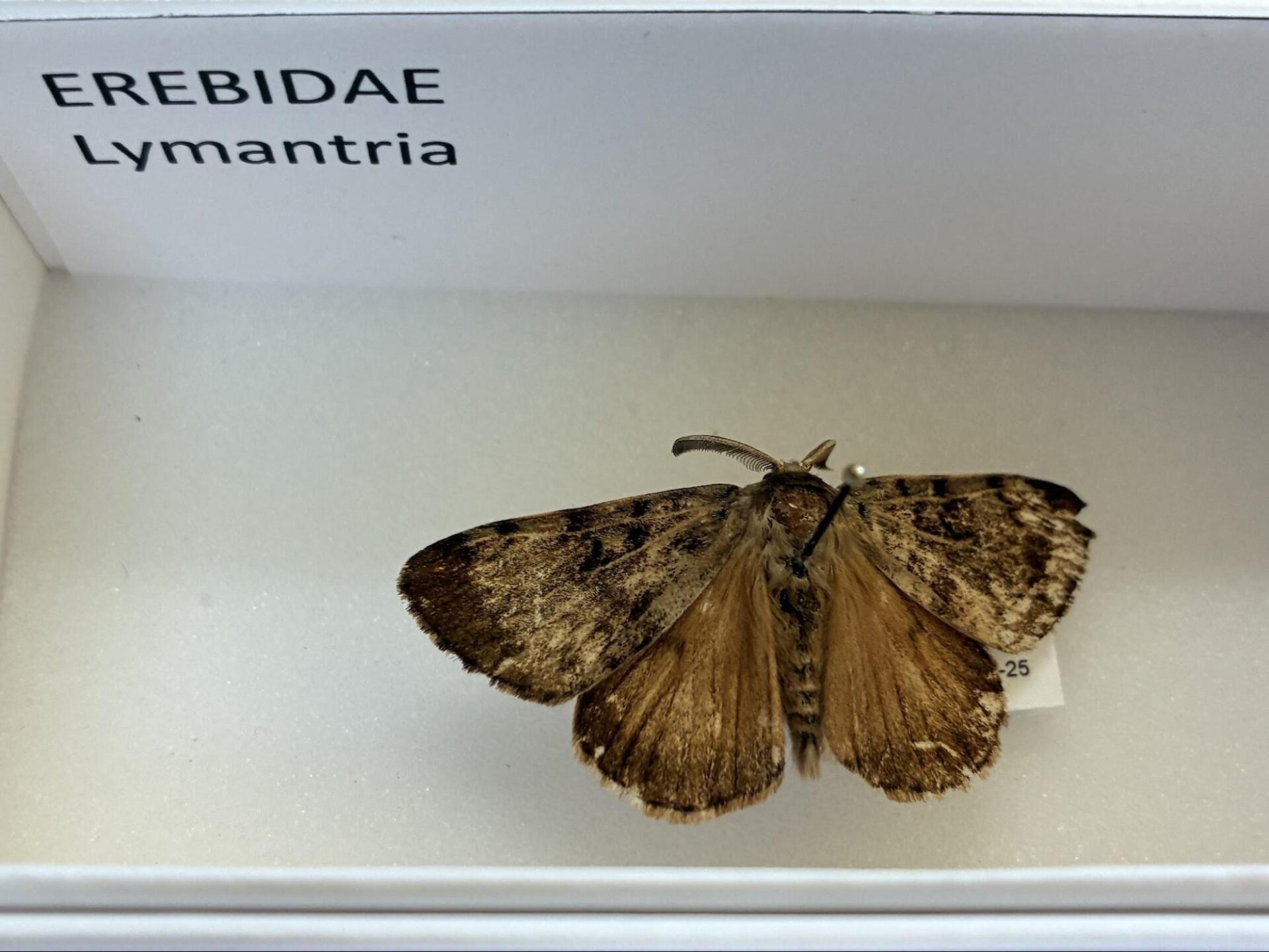
Pinned male Spongy Moth Specimen from TEENS collection.
The Spongy Moth (Lymantria dispar) is a moth native to Europe, North Africa, and Asia. In 1869, Étienne Léopold Trouvelot transported the species to North America in the hopes they'd breed a more durable silk worm for the silk industry (Source). Unfortunately, bringing this moth to North America allowed them to flourish in a place where they had no natural predators to slow their spread. When a species travels to a new geographic location, is allowed to reproduce quickly without any predators or environmental factors to keep the population in balance, and causes harm to native species present, it is viewed as an invasive species. Now that this invasive species has been able to flourish, it has caused damage to our trees, defoliating them at a tune of 9 million acres in 2021 and causing an estimated 868 million dollars of damage to citizens annually across the Eastern United States (Source; Source).
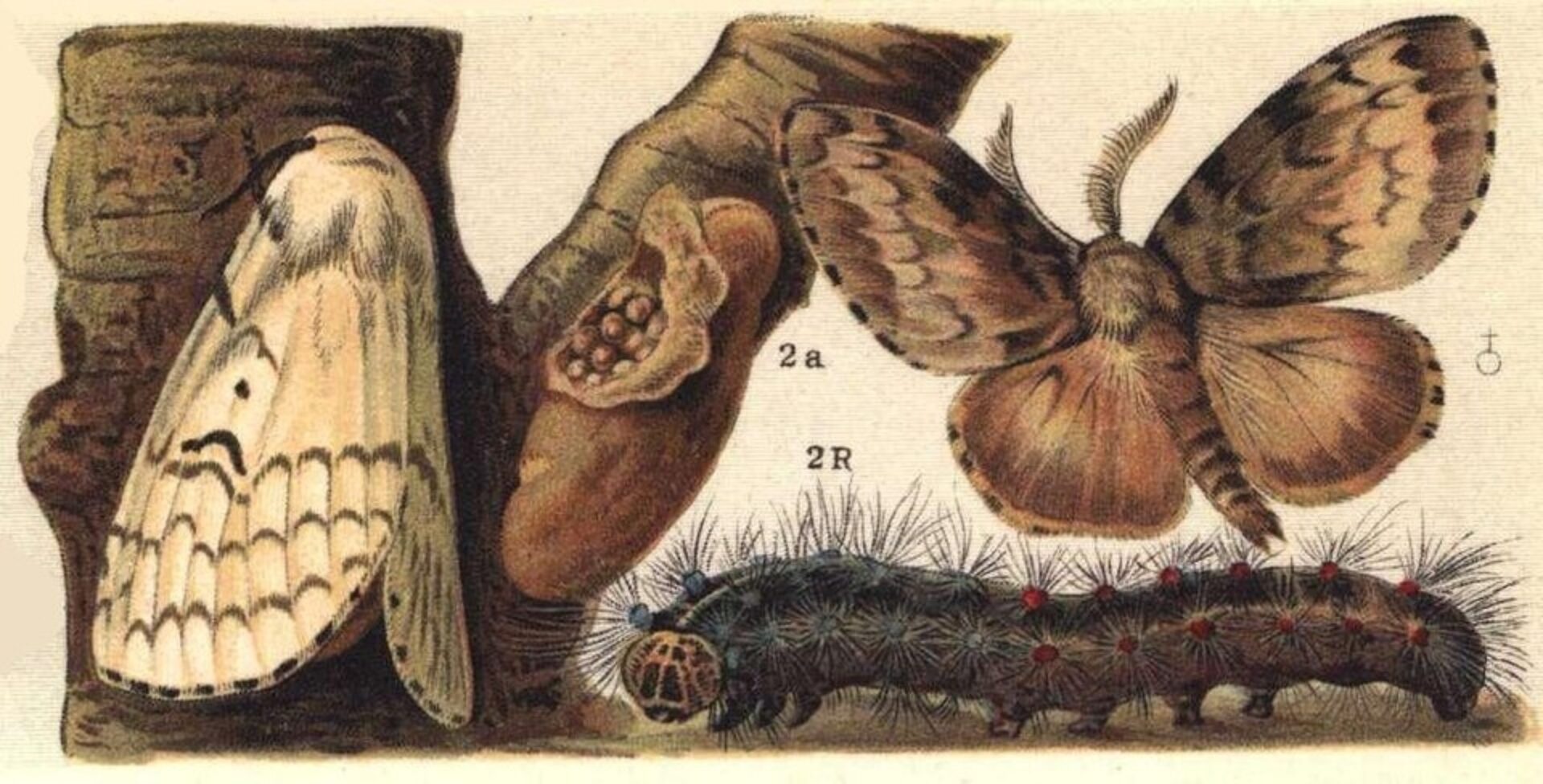
Illustration of Spongy Moths circa 1910. (From Nordisk familjebok by Bibliographisches Institut Leipzig)

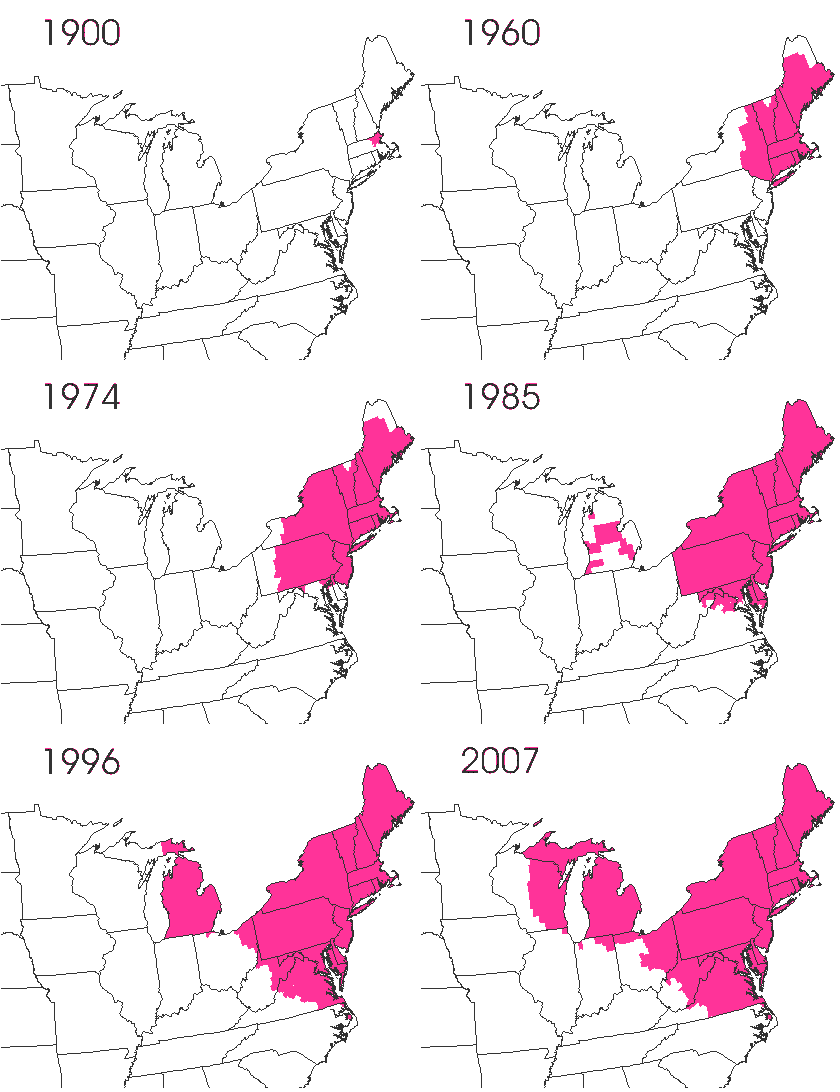
A map demonstrating the spread of the species in the United States between 1900-2007. (By US Forest Service)
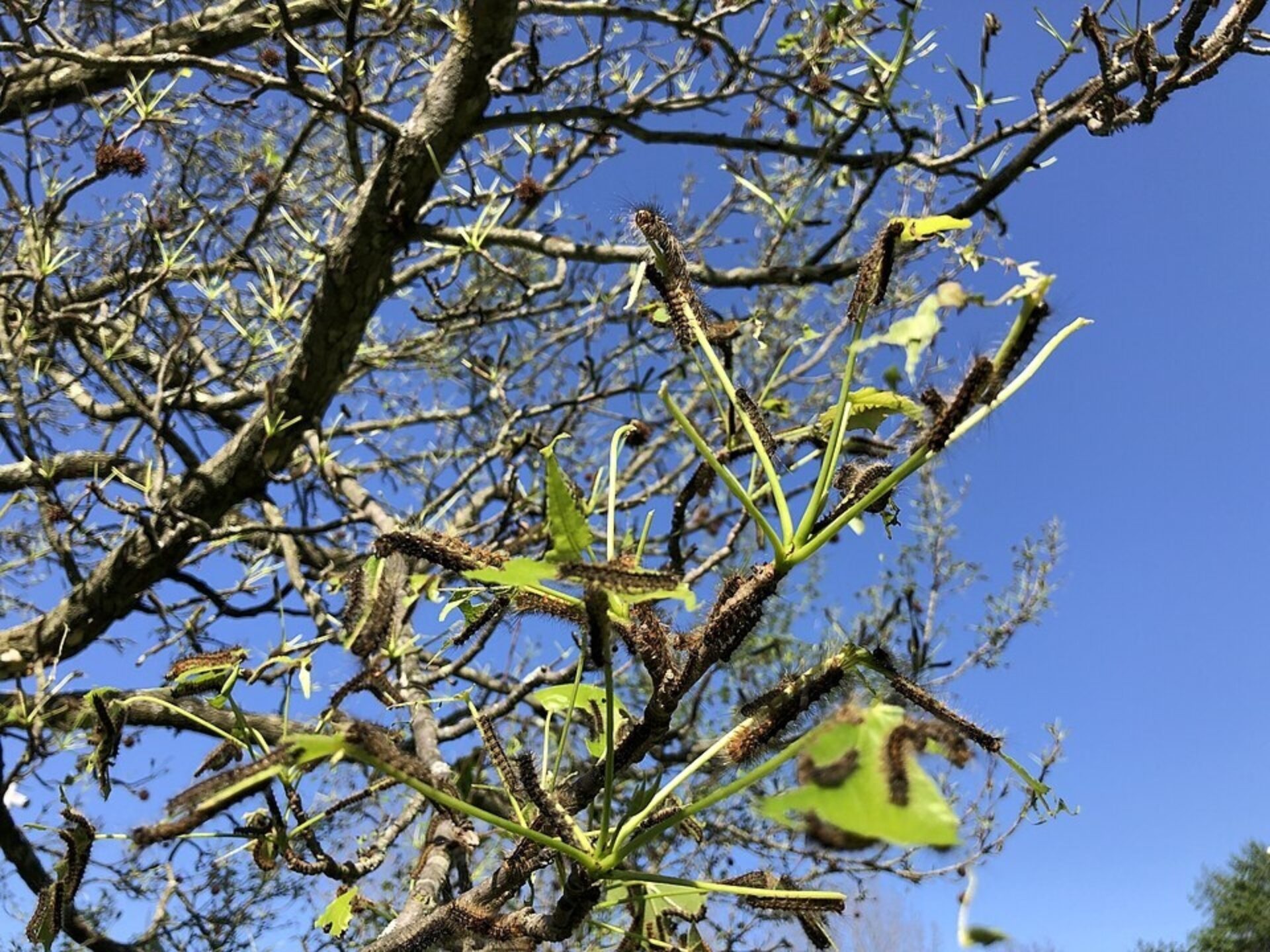
Spongy Moth Caterpillars defoliating an American Sweetgum (Liquidambar styraciflua). (Photo by Famartin | CC BY-SA 4.0)
But, the Spongy Moth wasn't always called the Spongy Moth. As I was researching on Bugguide.net to learn its different biological factors, like their sexual dimorphism with the male being brown and able to fly and the females being white and unable to fly, I discovered that this species had the previous common name of "Gypsy Moth." I had heard of the word before but I wasn't too familiar with its meaning. Researching this word helped me understand its impact on the marginalized population and how it makes sense to use another word in its place.
It seemed to me that renaming the common name—to change problematic names and recognize the mistakes of the past to help reduce the damage we cause in the future—is the right thing to do. But if it's the right thing to do, why haven't all the names changed?
In the case of the Spongy Moth, the Entomological Society of America (ESA) changed the species' previous common name in 2022 as part of their "Better Common Names Project." The project started in 2021 as conversations about social justice within the world of science were brought to the forefront. This project sought to "bar names referencing ethnic or racial groups and names that might stoke fear" and intended to eliminate these hasty generalizations of populations linking them to harmful rhetoric (Source). The previous common name, "Gypsy Moth," was evaluated because the term "Gypsy" is a derogatory name for the Romani people who have roamed Europe and West Asia for centuries. It's even been described as erasing part of their culture, as the image of this word portrayed by the media sums them up into vagabonds with skirts, rather than the image of complex culture and the under-reported oppression that befalls the Romani people worldwide (Source).
Better Common Names Project from the ESA website.
As the next step, the ESA wanted to rename the moth based on its physical description. This change has a "two birds with one stone" outcome. Common names that are based on morphological features are intended to be more readily identifiable for those learning to identify species and, with the evaluation deeming this a derogatory name, will be more inclusive. They found a name used in France for the moth, "spongieuse," which translates to "spongy." This describes an attribute of the Spongy Moth because its eggs look like a fuzzy sponge. Calling it a white moth or a fuzzy moth—traits that also describe the Spongy Moth but are not unique to this species—could confuse newcomers and make it more difficult to identify. With everything considered, the Spongy Moth name change makes it easier for all naturalists and bug lovers who are learning bug common names.
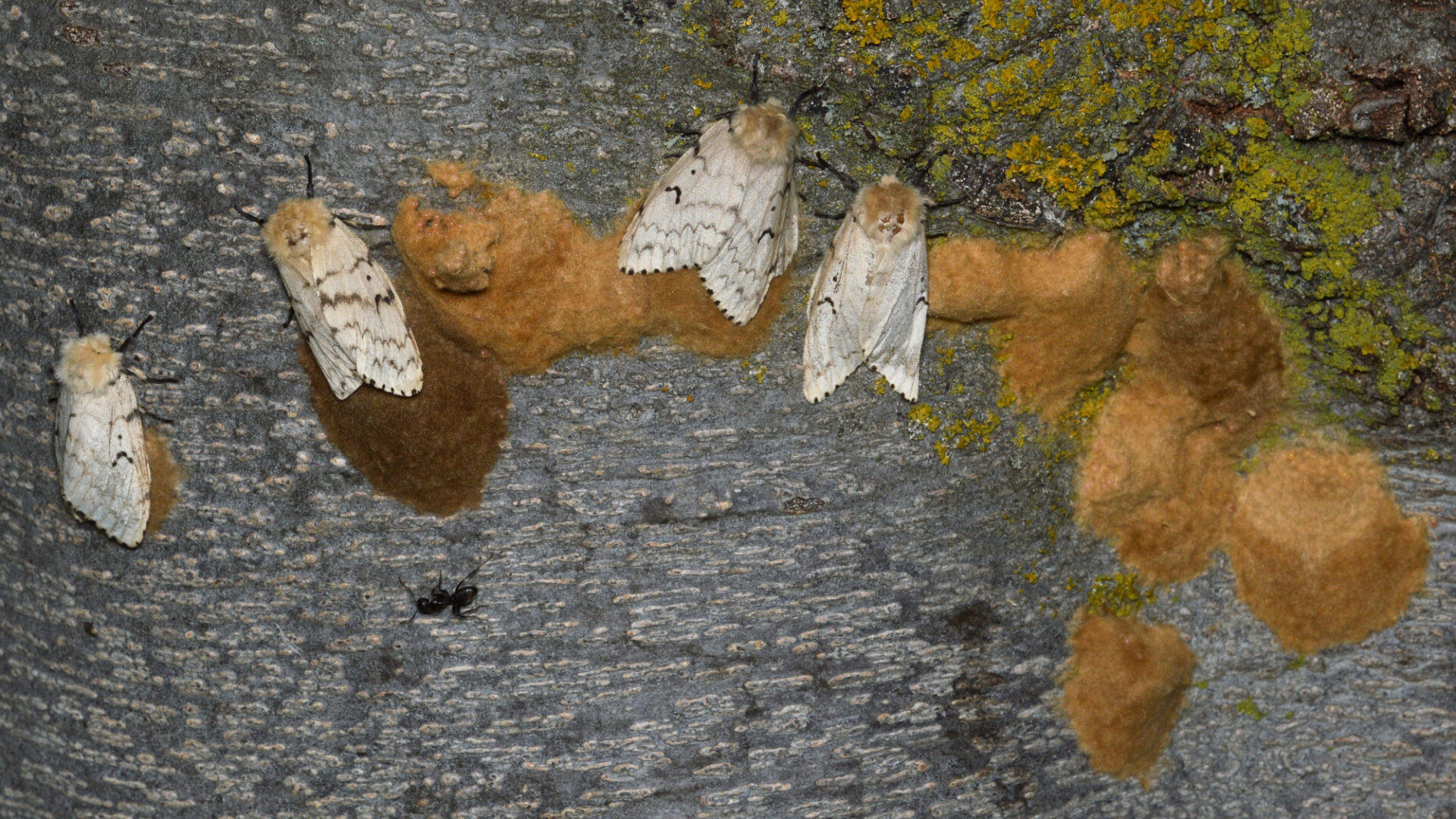
Image of Spongy Moth females and their eggs. (Photo by Ryan Hodnett | CC BY-SA 4.0)
_with_Egg_Masses_-_Guelph,_Ontario_2020-07-26.jpg)
The biggest hurdle to overcome is the time and procedures it takes to reason a new name into existence. From March 2021, when the ESA launched its efforts to review and change problematic insect names, the decision about why this specific derogatory name should be eliminated, figuring out a replacement, voting from different interest groups, and finally implementing the name was accomplished in March 2022 (Source). The ESA announced in 2024 that it was considering nine other species name changes, including the Japanese Beetle. No specific timeline has been given for these insects. The most recent scientific papers I found about derogatory naming (Source) and derogatory naming in entomology (Source) were from January 2025. Revitalizing this conversation by having more comments on these projects will help make these changes occur more swiftly. There are new proposals being submitted for new names as a part of the Better Common Names Project; if you'd like to get involved, you can go to this website to comment on the naming of our insects (Source for commenting).
Public comments, good evaluation, and unique naming helped in changing the species' common name to Spongy Moth, which better equipped the scientific community to be more accessible. It creates inclusivity and promotes more descriptive naming in the process. This is just one example of the many scientific organizations that are evaluating harmful names to help the diverse base of naturalists in the field and promote an ever greater diversity in the future. A future, I for one, can't wait to see. Stay curious my friends!